


Fallout Shelter
4.6310.06K Reviews
App Specs
- Version
- 2.5.1
- Updated On
- License
- Free
- Downloads
- 50,000,000+
- Developer
- Bethesda Softworks LLC
- Categories
- Simulation
- Platform
- Android
Screenshots



 Analysis by AppCompare
I like Fallout Shelter most when I treat it as a little routine rather than a game that demands my full attention. I check on a vault, make a few practical decisions, and leave it to develop while I get on with my day. That steady rhythm is a better fit for this free simulation game than expecting a console-sized Fallout adventure on a phone. It comes from Bethesda Softworks LLC, and its focus is much narrower: you run an underground community, juggle its needs, and decide when to take a risk outside.
The setup is easy to grasp, but I found that the enjoyable part is learning to spot trouble before it becomes a chain reaction. A room can look productive while a shortage elsewhere makes the whole vault harder to manage. If you enjoy small planning choices, gradual progress, and a playful post-apocalyptic setting, there is plenty to like. If you want a story-led role-playing game or constant action, this is not the same kind of Fallout experience.
A sensible first visit to the vault
My baseline routine is simple: check the resource bars, look for rooms or dwellers that need attention, then decide whether I have time for anything riskier. That order matters. It is tempting to expand as soon as the game allows it, but every new room adds another thing to keep supplied and staffed. I prefer to make sure the vault can handle its current workload before adding more space.
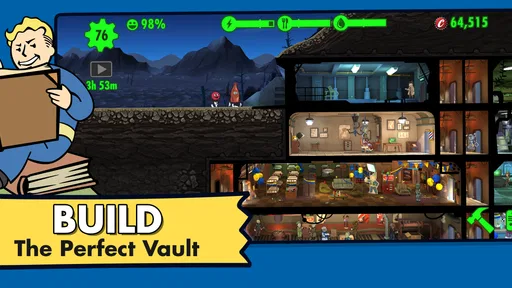
Room placement is worth thinking through rather than treating the vault as a picture to decorate. The layout affects how easy it is to read what is happening at a glance, especially once several rooms and incidents compete for attention. I keep related production areas easy to find and avoid expanding simply because an empty space looks unfinished. A tidy vault is not just attractive; it makes quick check-ins less fussy.
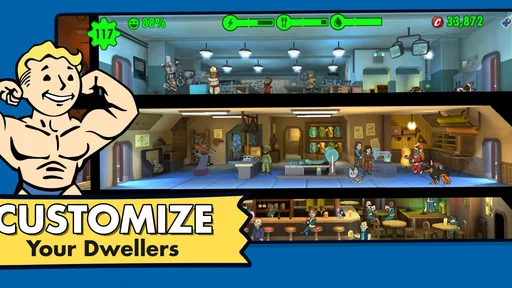
Assigning dwellers is another decision that becomes more useful with practice. Their SPECIAL attributes give you a reason to match people to particular jobs, but I would not treat every assignment as permanent. When production is stable, I can move someone to meet a temporary need; when it is not, preserving a reliable team is often more valuable than chasing a perfect match. The practical lesson is to make changes for a clear reason, then check whether the vault actually improved.
Settings and habits that make check-ins smoother
I would start by checking the game’s available options on your device and adjusting the experience to suit how you play, rather than assuming every default will feel right. The most important setting is the one that helps you notice when you want to return, not one that turns a casual management game into a stream of interruptions. If you prefer occasional visits, keep your routine intentional: open the vault when you have a moment to respond, deal with the most urgent need, and close it once the situation is stable.
A useful habit is to scan for low resources before collecting rewards or starting another activity. That small pause helps prevent a satisfying click from distracting you from a problem that needs attention. I also try not to make several changes at once. If I move workers, build a room, and send explorers out in one burst, it is harder to tell which choice helped or created a new strain. One deliberate adjustment at a time makes the vault easier to understand.
Worth Reading Before You Choose

EA SPORTS FC Mobile 26 Is a Bigger Football Game, but It Takes Time

Flipboard Shows What News Apps Must Do Beyond the Feed

Switching to Android Auto Means Rethinking Your Driving Routine

Google Calendar Makes a Crowded Week Easier to Manage

Ludo King Makes the Most of the Minutes Between Plans

Baby Panda World Brings Quick Play to Modern Phones, but Its Game Library Feels Busy
Because the game is free to download and includes optional in-app purchases, I recommend deciding your own spending boundary before you get invested in expanding. Purchases can be tempting when progress feels slow, but they are not a substitute for learning how your existing rooms and dwellers work together. I would first see whether the normal pace suits you; if waiting and incremental planning already feel irritating, paying to speed through that rhythm may not make the underlying game a better fit.
Repeatable patterns for safer progress
Once the basics feel familiar, I find it helpful to separate routine vault care from optional risks. First make the core community steady; then send a dweller exploring or take on a quest if you have the attention to manage it. This is especially useful during a short break: a quick resource check may fit, while a longer activity is better saved for a time when you can follow its progress rather than rush through it.
Exploration is more satisfying when I treat it as a calculated gamble, not a guaranteed source of upgrades. A well-equipped dweller can bring back useful items, but the wasteland can also put that person in danger. I avoid sending someone out simply because the vault is quiet. I ask whether I can accept the possibility of losing that worker temporarily or having to spend attention getting them back. That trade-off matters most in a smaller vault, where one absent dweller can leave a job uncovered.
Quests offer a different kind of session from ordinary room management. Their turn-based encounters make them a better choice when I want to make active decisions instead of checking meters and assigning work. I try to choose between a quest and an expedition based on the time and focus I have, rather than starting both out of habit. That distinction helps the game work as either a brief management stop or a more involved play session without pretending those activities ask for the same commitment.
For an everyday example, I might open the game while waiting for an appointment, confirm that food, water, and power are in reasonable shape, respond to an incident, and leave the vault alone if nothing needs immediate attention. Later, when I have a longer break, I can think about a quest or prepare an explorer. That division is more comfortable than checking constantly. It also gives me a clear answer to a common concern: you do not have to turn every visit into a long session to make sensible progress.
Where the management can become demanding
The same systems that make the game engaging can create friction. As a vault grows, there is more to monitor, and random dangers can interrupt a plan just when I thought everything was settled. If you like a hands-off idle game that rarely asks you to react, this may feel busier than expected. If you prefer a detailed strategy game with extensive control over every outcome, the simplified mobile format may feel limited instead.
There is also a difference between this and the usual alternatives in simulation games. It is more focused on keeping a small community functioning than on building a broad city, designing elaborate systems, or following a long narrative campaign. The Fallout setting gives its incidents and exploration a recognizable flavor, but it does not make the game a replacement for the series’ larger role-playing adventures. I would choose it for compact management and characterful interruptions, not for open-ended world exploration.
For a new player, the most useful response to a crisis is usually to pause the urge to expand and ask what the incident is exposing: a weak resource supply, a room without enough support, or a roster stretched too thin. Fixing the underlying pressure is more reliable than making a dramatic change just to feel busy. I also recommend keeping a few flexible dwellers where possible, since a vault staffed with no room to adapt can make every interruption feel worse.
It is a good match for Fallout fans who want a lighter way to spend time in that universe, and for players who enjoy management in short, repeatable visits. I would point someone elsewhere if they want a strong central plot, direct action, or a game that never asks them to monitor a community. The Teen content rating is useful context for choosing it for a younger player, while parents should still make that decision based on their own preferences and the game’s presentation.
What to expect from the long game
Fallout Shelter has been available since Aug 12, 2015, and the current version is 2.1.2. It works on Android 7.0 and later, which is worth checking before downloading on an older device. The game has a 4.6 average from around 3.9 million ratings, with over 50 million installs; that broad audience makes sense to me, because its basic loop is easy to understand even if managing a larger vault takes patience.
Its longevity comes less from a single dramatic objective than from the satisfaction of seeing a community become more capable. That also means it can feel repetitive if you need a fresh story beat every time you play. I like setting modest goals for a visit—stabilize supplies, prepare someone for a job, or handle one activity—rather than expecting every session to deliver a major breakthrough. Small goals make the slow-building structure feel intentional instead of stalled.
There is no need to spend money just to find out whether the core loop appeals to you: the game is free, while in-app purchase prices range from $0.99 to $99.99 per item. I would approach those purchases cautiously and think of them as optional convenience, not a requirement for enjoying the basic management. If you are unsure, play at the natural pace first and see whether you enjoy planning around constraints. That is the part the game does best, and no purchase can decide whether that style is fun for you.
The Vault Life Begins
Starting with the basics, Fallout Shelter is all about building and managing a vault. You get to be the Overseer, which is basically like being the head honcho. Your job? Keep your dwellers happy, productive, and safe from nuclear threats and other dangers lurking in the wasteland. Sounds fun, right?
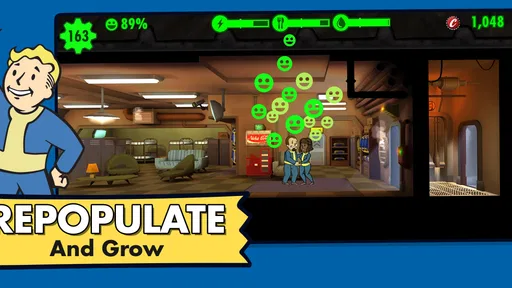
The game kicks off by letting you design your vault layout. You get to build various rooms like power generators, water treatment plants, and living quarters. Each room serves a purpose, contributing to the overall well-being of your vault. It’s kind of like playing SimCity but in a post-apocalyptic world.
Managing Resources
One of the coolest aspects of the game is the resource management. You need to balance three main resources: power, water, and food. If any of these run low, your dwellers start to get unhappy, and things can go south pretty quickly. Trust me, keeping an eye on these is crucial.
Assigning dwellers to the right tasks is also key. Each dweller has their own stats, like Strength, Perception, and Intelligence. You’ll want to match them to jobs where they can shine. Got a dweller with high Strength? Throw them in the power generator room. Someone with high Intelligence? They belong in the med bay. It’s all about maximizing efficiency.
Exploring the Wasteland
No vault adventure would be complete without a bit of exploration. You can send dwellers out into the wasteland to find weapons, outfits, and other goodies. This part of the game is a blast because you never know what they’ll bring back. Plus, it adds a nice layer of depth and excitement.
The wasteland is a dangerous place, so make sure your explorers are armed to the teeth. There’s nothing worse than losing a dweller to a pack of mole rats or raiders. The thrill of exploring is worth the risk, though, especially when you score some rare loot.
Challenges and Events
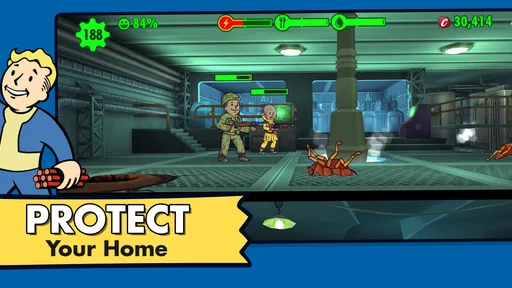
As your vault grows, so do the challenges. You’ll have to deal with random events like fires, radroach infestations, and raider attacks. These events keep you on your toes and add a nice bit of unpredictability to the game. It’s like, just when you think everything’s under control, bam! A deathclaw shows up at your door.
There are also quests you can undertake, which are super fun. They let you explore new locations and battle enemies in turn-based combat. Completing quests often rewards you with valuable resources and items, so they’re definitely worth your time.
Graphics and Sound
Visually, the game is charming. The cartoonish art style fits perfectly with the quirky Fallout vibe. The animations are smooth, and the overall presentation is top-notch for a mobile game. The sound effects and music also do a great job of immersing you in the Fallout universe. It’s like a little piece of the wasteland in your pocket.
Final Thoughts
Overall, this is a fantastic mobile game that offers a fun and engaging experience. Whether you’re a die-hard Fallout fan or just someone looking for a new game to sink your teeth into, this one is worth checking out. It’s got the right mix of strategy, resource management, and exploration to keep you hooked for hours.
So, if you’re ready to step into the shoes of an Overseer and build the vault of your dreams, give it a try. Just remember to keep your dwellers happy and your radroaches at bay!
When I think of the game as a whole, I would recommend it most to someone who enjoys seeing a plan gradually pay off. A stronger vault is not built through one perfect decision; it comes from noticing which parts of the routine are fragile, responding to incidents without panicking, and resisting the urge to expand before the basics are dependable. That is a modest but satisfying kind of mastery, and it suits a phone game I can visit in short stretches.
The main caveat is that its best qualities come with a particular pace. Players who enjoy incremental management can find a comfortable rhythm in balancing resources, staffing rooms, and choosing when to explore. Players who want a directed campaign, frequent new story developments, or a more demanding tactical challenge may be happier with another game. I see this as a compact vault-management diversion with its own Fallout personality, not a substitute for the larger adventures that made the setting famous.
For me, the most useful measure of whether it is worth keeping installed is simple: do I enjoy making small decisions that improve tomorrow’s vault? If I do, the steady loop gives me a reason to return. If I only enjoy the idea of owning a vault but dislike monitoring supplies and reacting to trouble, the novelty may fade. That distinction is more important than being a series fan, because the day-to-day management is what I spend most of my time doing.
Pros
- Immersive gameplay with detailed graphics.
- Free to play with optional in-app purchases.
- Engaging
- strategic resource management.
- Regular updates add new features.
- Offline play available for on-the-go fun.
Cons
- Can become repetitive over time.
- In-app purchases can be expensive.
- Limited social interaction features.
- Requires patience for resource collection.
- Some users report occasional crashes.
FAQs for Fallout Shelter
What is the main objective of Fallout Shelter?
In Fallout Shelter, your primary goal is to build and manage an underground vault as an Overseer. You are tasked with keeping your dwellers happy and alive by providing them with essential resources like food, water, and power. Additionally, you must protect your vault from threats such as raiders and radroaches.
How do I attract more dwellers to my vault?
You can attract more dwellers by building a Radio Studio, which broadcasts signals to the wasteland. Additionally, you can pair male and female dwellers to increase your vault's population naturally through procreation. Occasionally, new dwellers will also arrive at your vault entrance after exploring the wasteland.
What are the different room types available in Fallout Shelter?
Fallout Shelter offers a variety of room types, each serving a specific purpose. Key rooms include the Power Generator for energy, the Water Treatment Plant for clean water, and the Diner for food. There are also training rooms to improve dwellers' skills, and crafting rooms for creating weapons and outfits.
How can I improve my dwellers' skills?
To enhance your dwellers' skills, build and utilize training rooms such as the Classroom for Intelligence, the Weight Room for Strength, and the Athletics Room for Agility. Assign dwellers to these rooms to improve their specific skills over time, which can help them perform better in various tasks and jobs.
What are lunchboxes and how can I acquire them?
Lunchboxes are special reward packs in Fallout Shelter containing valuable items like resources, weapons, outfits, and caps. You can acquire them by completing objectives, leveling up dwellers, or purchasing them through in-app purchases. They are a great way to boost your vault's progress and strength.


